
The HR Digital Employee
The HR Digital Employee
Designing the personality, and interaction patterns for an autonomous AI agent
Project Type
Interaction, Visual, and Conversation Design
Role
UI/UX Designer
Year
2025

This product is currently deployed with select enterprise customers in private beta. This project is currently under strict NDA. The case study below only outlines the high-level design methodology and interaction philosophy.
At a Glance
"Claudia" is not a chatbot. She is an omnipresent "HR Digital Employee" integrated into the HR Recruiter lives: inside WhatsApp, Email, Calendar, and Internal Chatbot application. I worked in a core triad with a Product Manager (Business Logic) and AI Engineers. My focus was the "User" side: the face and soul of the AI Agents.
The Challenge
Designing an experience with Zero UI. How do you create trust and usability when the interface is purely conversational and invisible?
The Solution
A defined persona and interaction model that mimics a helpful "Junior HR Recruiter Colleague" rather than a robotic command line.
The Problem
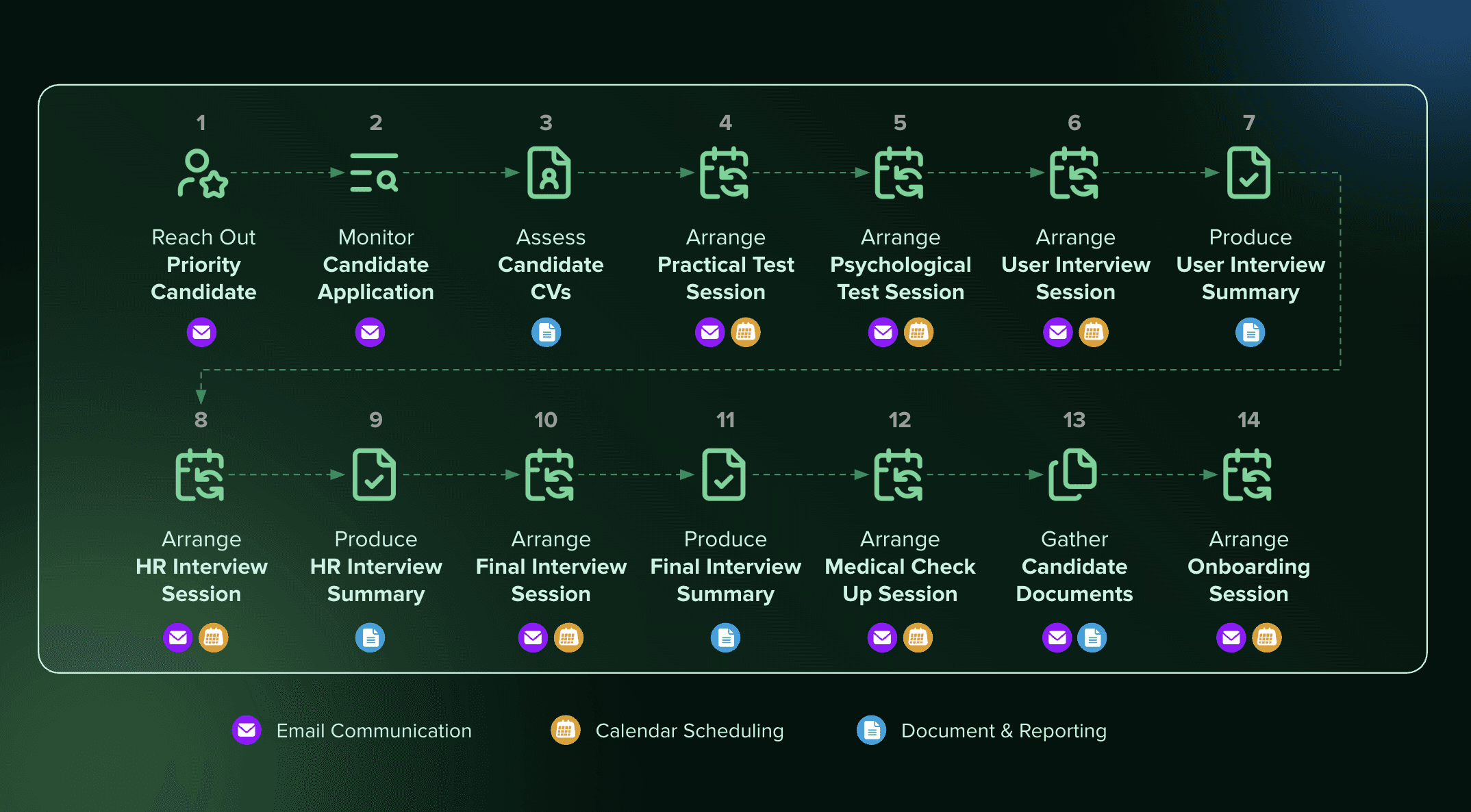
Recruiters are hired to assess talent, culture, and potential. Yet, our research showed they spend 80% of their time acting as human routers—managing calendars, chasing updates, and scanning keywords.
The Burnout Cycle
Logistic Gridlock: Finding a time slot that works for the Candidate, the Hiring Manager, and the Interviewer often takes 10+ emails/chats per candidate.
Resume Fatigue: In high-volume hiring, screening 100+ CVs leads to cognitive overload, resulting in missed quality candidates due to sheer exhaustion.
Communication Fragmentation: The recruiter is stuck in the middle, constantly "pinging" multiple PICs (Person in Charge) for feedback, leading to bottlenecks.
The Consequences
Because of this administrative drag, recruiters have zero margin for the high-value work: building relationships and assessing deep culture fit.
The Process
Because this product has no traditional UI, standard wireframes were useless. Instead, I approached the design as a System Architecture challenge.
Step 1: Deconstruction (The Audit)
I worked with the Product Manager to map the entire "Hiring Lifecycle." We identified every touchpoint where the AI would intervene.
The Insight: We realized that the "Happy Path" was easy, but the "Unhappy Path" (e.g., candidate reschedules 3 times) required complex fallback logic.
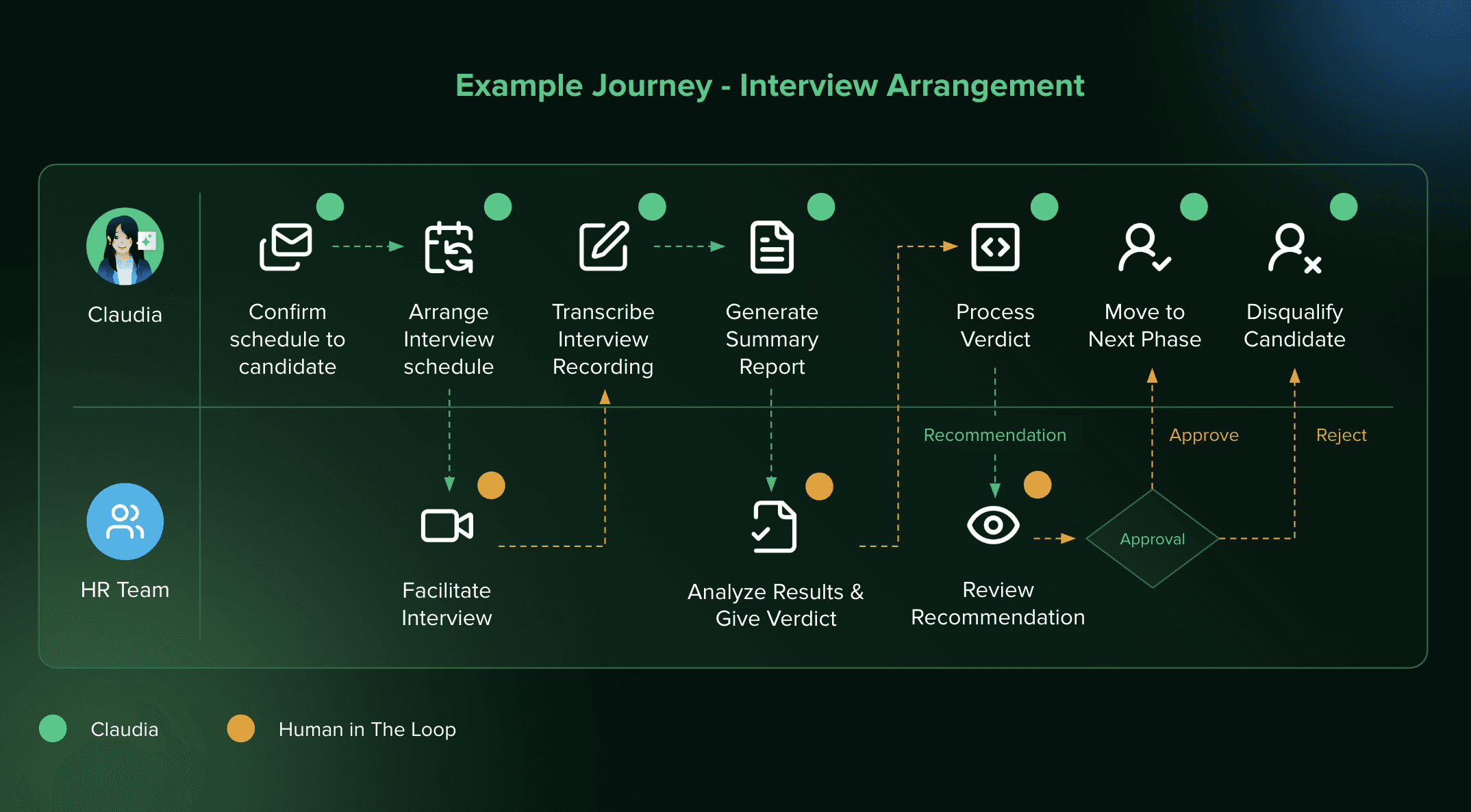
Due to the confidential nature of this process, I can only show 1 example and the high level journey
Step 2: Defining the "Brain" vs. The "Face"
The product manager and I collectively define the system logic. I use Logic Flowcharts to ensure every edge case (errors, permissions, latency) is accounted for.
Step 3: Humanization (The Design)
I wrote copywriting and conversation guideline for key scenarios — like Arrange Schedule Email, Rejections, and Negotiations. We tested these text-only scripts with internal teams to see which tone felt "robotic" and which felt "helpful."
This step also where I use visual design— character design and micro animation—to make the complex system feel approachable and safe. And then, wrap it all together into a Figma prototype to see the end-to-end interaction.
The Solution

Character Design: The Avatar as the Anchor
Since there is no interface, the Profile Picture and Avatar became the entire brand identity. I designed a clean, illustrative 2D Female Vector character.
Why? In a WhatsApp list full of real human photos, the vector style instantly signaled "I am an AI," managing expectations while remaining friendly and distinct from spam bots.
Example Interaction
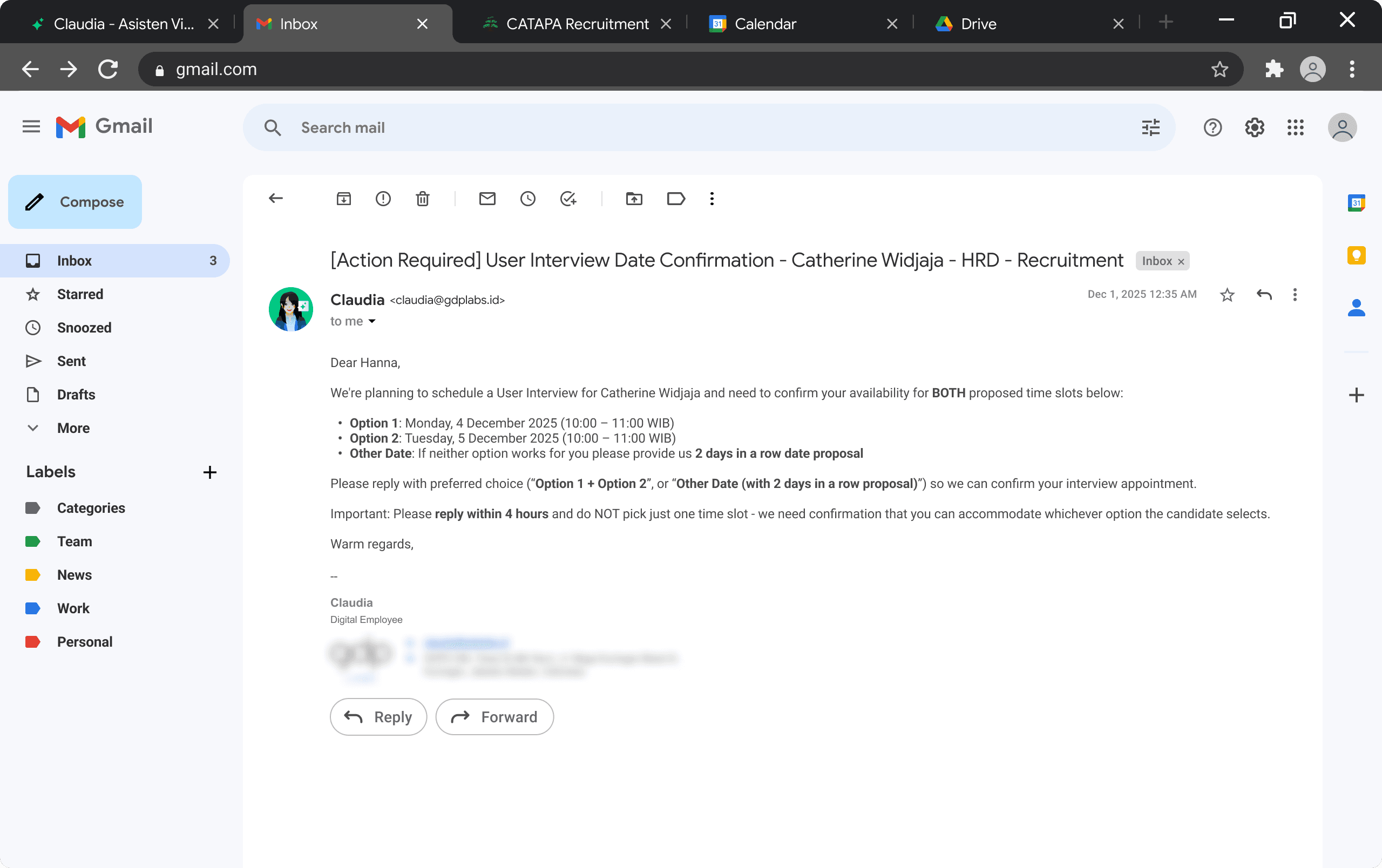
Example of Claudia arranging schedule to interviewer via email
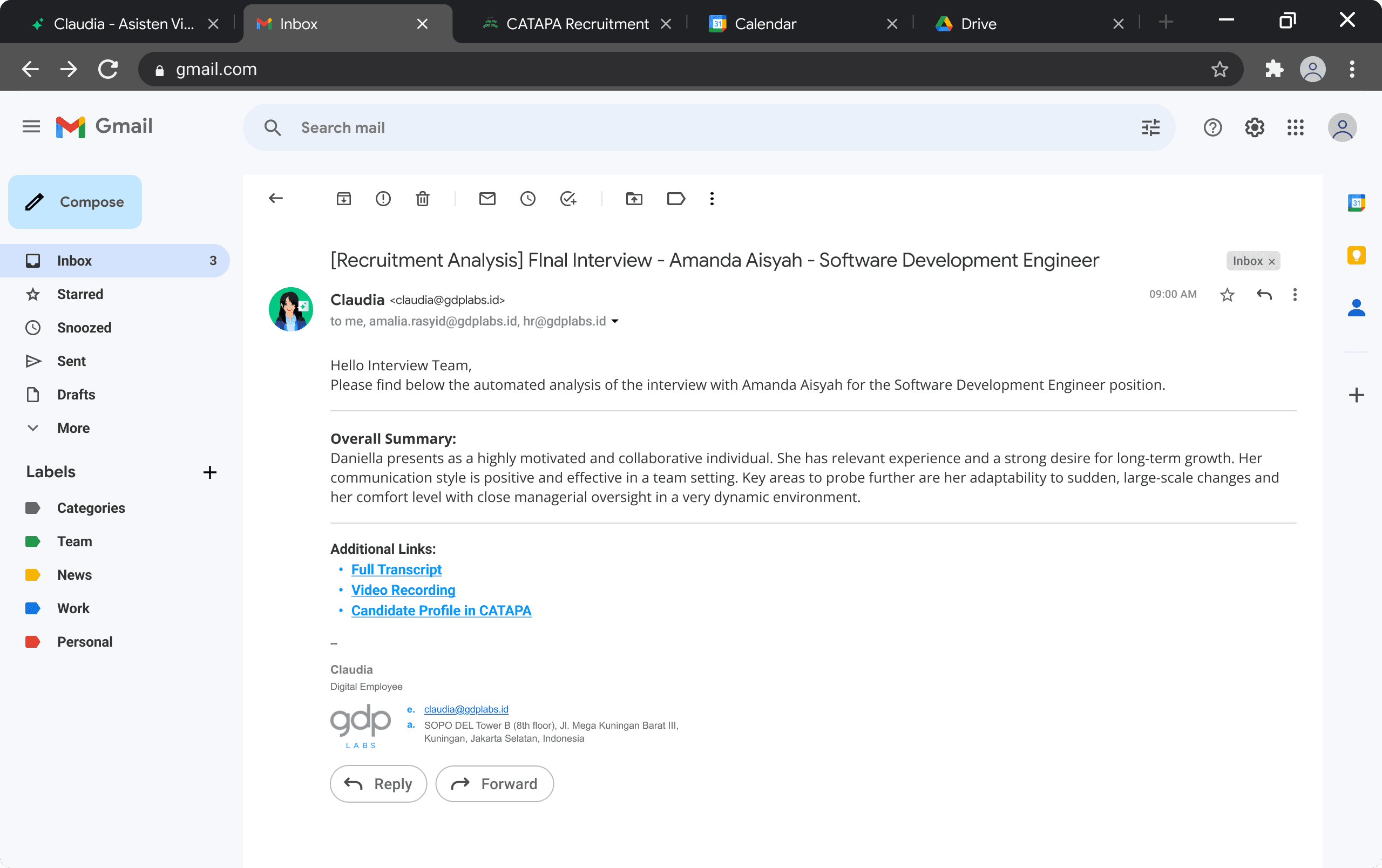
Example of Claudia send the interview session summary to HR via email for supporting decision making
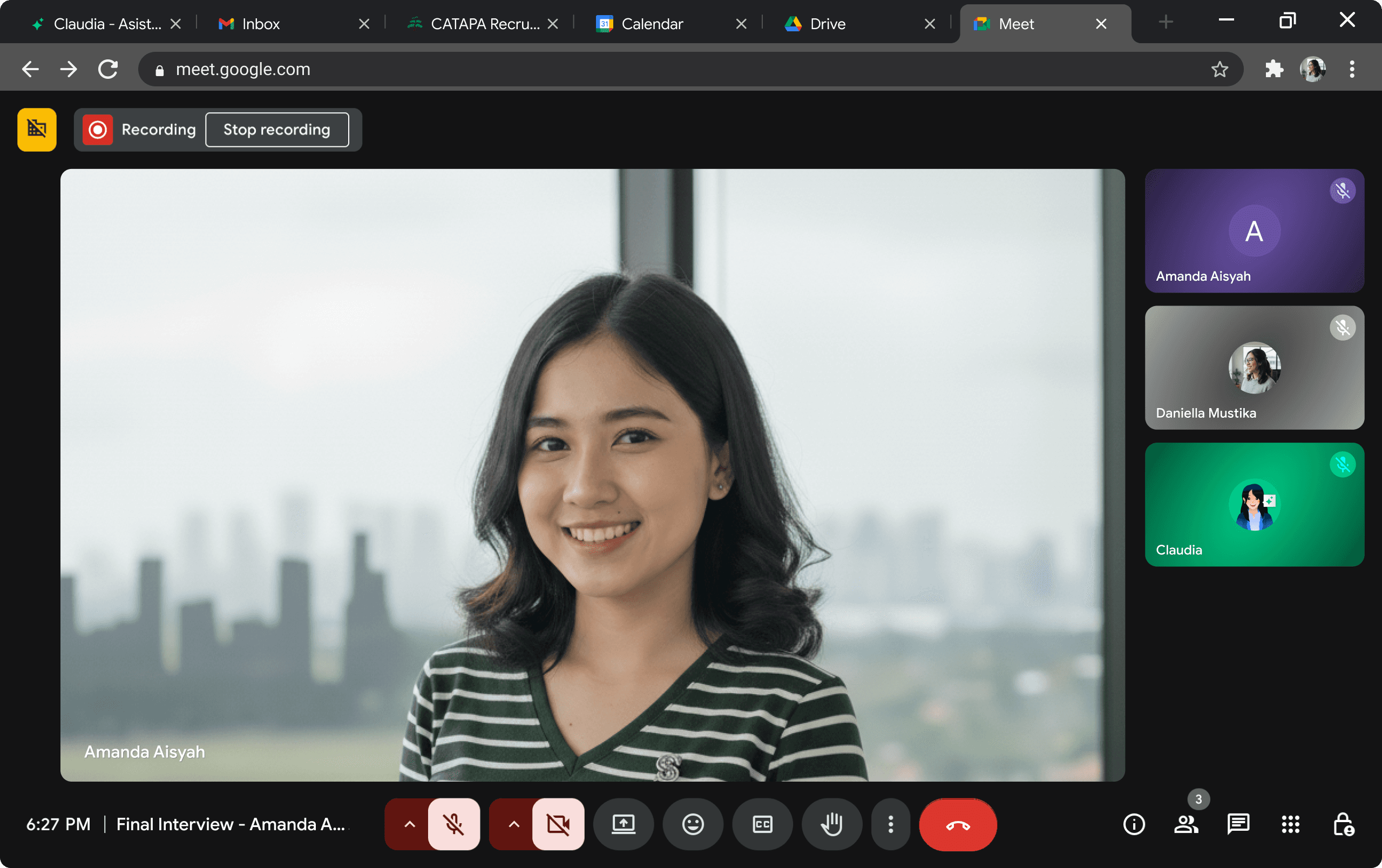
Example of Claudia participating in interview session (illustrative only)
The Results
85%
increase in hiring velocity
80%
less time on logistics and administrative tasks
Business Impact
By delegating the logistic and administrative process to Claudia, HR recruiter team could finally focus on the people and strategic decision.